
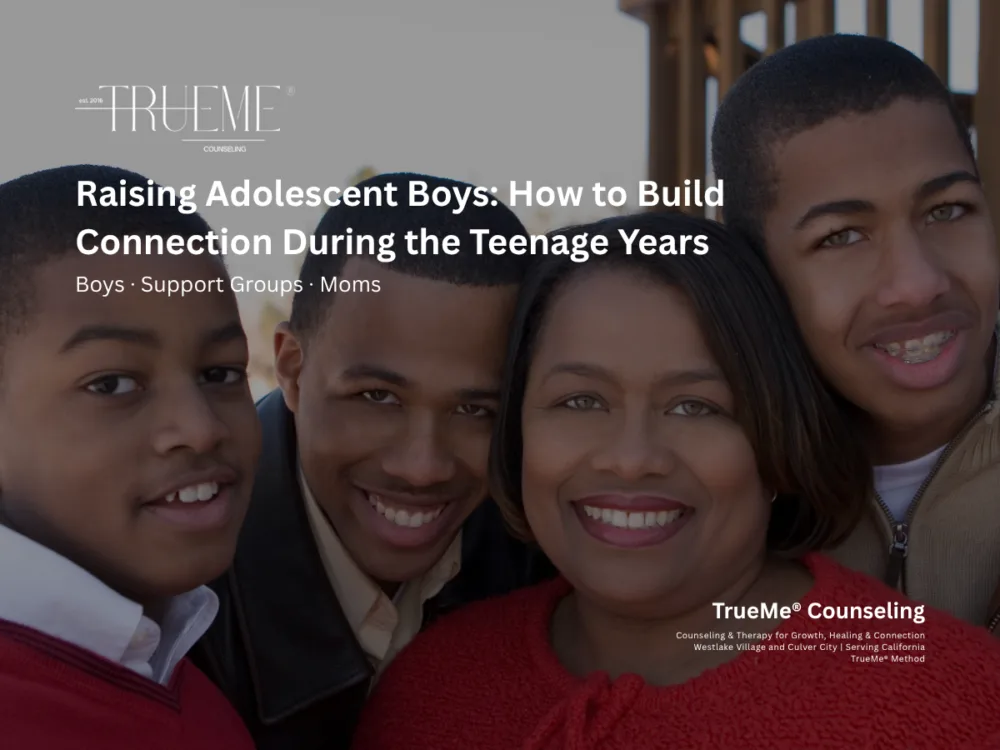
How to Build Connection with Your Boy During the Teenage Years
Raising adolescent boys can feel like watching someone you know and love become a stranger overnight. Behind the silence, defensiveness, and withdrawal, many boys are simply trying to figure out who they are—and they still need their mothers more than they may show.
One day your son tells you everything.
The next, every answer is:
“Fine.”
“Nothing.”
“I don’t know.”
For many mothers, adolescence feels like losing the close relationship they once had with their son.
The hugs become less frequent.
The conversations become shorter.
The bedroom door stays closed a little longer.
It’s easy to wonder:
“Did I do something wrong?”
In most cases, the answer is no.
Growing up often looks like pulling away before learning how to reconnect.

Why Adolescent Boys Seem So Different
Adolescence is a time of tremendous physical, emotional, and neurological change.
As boys begin developing their own identity, independence often becomes one of their highest priorities.
That can look like:
- Wanting more privacy
- Spending more time with friends
- Challenging rules and boundaries
- Expressing fewer emotions
- Pulling away from family conversations
To parents, these behaviors can feel personal.
Most of the time, they aren’t.
Many boys are navigating the difficult balance between becoming independent and still needing the security of home.

Behind the Attitude Is Often Something Else
It’s easy to focus on behavior.
The eye rolls.
The defensiveness.
The one-word answers.
But behavior is communication.
Behind frustration is often uncertainty.
Behind anger may be embarrassment.
Behind withdrawal may be anxiety or fear of getting something wrong.
Many boys struggle to express vulnerable emotions because they worry about appearing weak, disappointing others, or not knowing how to put their feelings into words.
Looking beneath the behavior allows parents to respond with curiosity instead of constant correction.

Why Connection Matters More for Boys Than Correction
When conflict becomes the primary way parents and teens interact, both begin expecting every conversation to end in frustration.
Rules are important.
Boundaries matter.
But relationships thrive when connection comes before correction.
Instead of asking:
“How do I get my son to listen?”
Consider asking:
“How can I help my son feel safe enough to talk?”
A strong relationship doesn’t eliminate conflict.
It creates a foundation where conflict can be repaired.
Encouragement Builds Confidence
Adolescence is filled with self-doubt.
Teenage boys are learning who they are while navigating friendships, school, sports, social media, and increasing expectations.
Encouragement doesn’t mean ignoring mistakes.
It means noticing effort.
Celebrating progress.
Recognizing strengths.
Feeling believed in by a trusted adult can make a lasting difference in a young person’s confidence and resilience.
You’re Not Meant to Navigate This Alone
Many mothers quietly wonder if they’re the only ones struggling.
They’re not.
Raising adolescent boys can feel confusing, emotional, and isolating.
Connecting with other mothers who understand these challenges can provide reassurance, practical ideas, and the reminder that you’re not alone.
Sometimes the greatest source of support comes from hearing someone else say,
“We’re going through that too.”
Frequently Asked Questions
Why do adolescent boys become distant from their mothers?
As boys develop greater independence, they often seek more privacy and autonomy. While this can feel like emotional distance, it is often a normal part of adolescent development rather than a reflection of the relationship.
How can I improve communication with my teenage boys?
Choose calm moments to talk, listen without immediately offering solutions, ask open-ended questions, and prioritize connection over correction. Consistent, respectful communication builds trust over time.
Is it normal for teenage boys to stop talking?
Many teenage boys become less verbally expressive during adolescence. While this can be typical, maintaining regular opportunities for connection helps keep communication open.
When should I be concerned about my son’s behavior?
Significant changes in mood, prolonged withdrawal, declining academic performance, substance use, or expressions of hopelessness may warrant additional support from a mental health professional.
Can a parenting support group help?
Support groups provide a space to learn evidence-based parenting strategies, connect with other mothers facing similar challenges, and receive guidance from experienced mental health professionals.
Ready to Join a Support Group?
Parenting an adolescent boy doesn’t come with a handbook, and every stage brings new questions.
Our Raising Capable Young Men Moms of Adolescent Boys Group is designed for mothers who want to move beyond constant correction and toward stronger communication, encouragement, and connection.
Together, we’ll explore practical strategies, share experiences, and build confidence as we navigate the unique challenges of raising teenage boys.
You don’t have to navigate life’s challenges by yourself.
Our therapist-led support groups provide a safe, confidential space to connect with others who understand your experience while receiving guidance from licensed mental health professionals.
If you’re interested in learning more about our current groups or would like help finding the one that’s right for you, we’re here to help.
Contact Us Today
📞 Call: (818) 964-1806
📧 Email: hello@truemecounseling.com
🌐 Explore our support groups or schedule a consultation: truemecounseling.com
Healing often begins with one conversation—and sometimes, one community.