
OCD | CALIFORNIA
OCD doesn't lie to you because you're broken — it lies to you because your brain cares
TrueMe® Counseling’s OCD specialists use Exposure and Response Prevention (ERP), ACT, and CBT to break the cycle of intrusive thoughts and compulsions — and help you reclaim a life that OCD is no longer running. Book your free 20-minute consultation today.
WHAT IS OCD?
Understanding OCD — and why is it so widely misunderstood?
Obsessive-Compulsive Disorder is a neurobiological condition characterized by a cycle of intrusive, unwanted thoughts (obsessions) that generate intense anxiety — and compulsive behaviors or mental rituals performed to relieve that anxiety, however temporarily. It is not a personality quirk, a preference for tidiness, or a metaphor. It is a specific, diagnosable disorder with a well-understood neurological mechanism, a wide spectrum of presentations, and highly effective evidence-based treatments.
OCD is profoundly misrepresented in popular culture. The real disorder is not the person who arranges their bookshelves carefully. It is the person who cannot leave the house without checking the stove seventeen times, or who is tormented by intrusive thoughts about harming someone they love, or whose mind has been captured by a religious doubt it cannot resolve. OCD targets whatever its sufferer holds most sacred — and weaponizes it.
At TrueMe®, we treat OCD with the depth, precision, and clinical specificity it requires. Our OCD-specialized therapists use CBT to break the cycle at its neurological root, not just manage its surface symptoms.
"OCD is not about being too careful or too clean. It is about a brain that has learned to generate urgent, believable false alarms — and a person exhausted by years of responding to them. Our work is to help that brain learn, at last, that the alarm is not the emergency it claims to be."
— TrueMe® Counseling
"OCD is not about being too careful or too clean. It is about a brain that has learned to generate urgent, believable false alarms — and a person exhausted by years of responding to them. Our work is to help that brain learn, at last, that the alarm is not the emergency it claims to be."
— TrueMe® Counseling
OUR EXPERT THERAPISTS TREAT THESE TYPES OF OCD
OCD takes many forms — all of them deserve specialist care
OCD is not a single, uniform presentation. It manifests across a wide range of themes and subtypes — each with its own content, its own compulsions, and its own particular way of convincing the sufferer that it demands to be taken seriously. Here are the presentations we treat at TrueMe®.

Contamination OCD
Intense fear of germs, illness, chemicals, or moral contamination — driving washing, cleaning, and avoidance rituals that expand relentlessly to fill the space the disorder is given.
Checking OCD
Repeated checking of locks, appliances, doors, and actions — driven by an intolerable uncertainty about whether something terrible will happen if the checking stops.
Symmetry & "Just Right" OCD
A pervasive sense that things are wrong, incomplete, or off — driving ordering, arranging, and repeating behaviors until an internal sense of rightness that never fully arrives has been achieved.
Health OCD
Persistent fears of developing or having a serious illness despite reassurance or medical evaluation—driving repeated body checking, symptom monitoring, online research, and reassurance-seeking.
Harm OCD
Intrusive, unwanted thoughts about harming oneself or others — experienced as deeply distressing and ego-dystonic by people who have no desire or intention to act on them, but who are tormented by their presence.
Sexual Orientation & Identity OCD
Intrusive doubts about one's sexual orientation or gender identity — not an authentic questioning process, but an anxiety-driven spiral of testing, reassurance-seeking, and mental review that OCD uses to generate perpetual uncertainty.
SIGNS YOU MAY NEED THERAPY
Most Common OCD Symptoms
OCD isn’t about perfectionism or simply being neat. It’s a cycle of intrusive thoughts, overwhelming doubt, and compulsive behaviors that can make everyday decisions feel exhausting. Effective treatment can help you break this cycle and regain control of your life. Tap a category to explore common signs.
- Intrusive, unwanted thoughts, images, or urges that feel impossible to dismiss
- Thoughts about harming yourself or someone you love — and being deeply horrified by them
- Persistent doubt about whether something terrible has happened or will happen
- Intrusive sexual thoughts that feel repugnant and deeply out of character
- Relentless religious or moral doubt — fear of having sinned or offended God
- A pervasive sense that things are incomplete, wrong, or “not just right”
- Obsessive doubt about your identity — who you are, what you feel, who you love
- Fear of being responsible for terrible outcomes through inaction or oversight
- Checking — locks, appliances, actions — repeatedly, well beyond what reason requires
- Washing or cleaning to the point of physical pain, skin damage, or extreme time loss
- Mental reviewing — replaying events or thoughts until certainty is reached (it never is)
- Seeking reassurance from others — repeatedly asking the same question for temporary relief
- Ordering, arranging, or repeating actions until they feel “right”
- Counting, tapping, or touching objects in specific patterns or sequences
- Avoiding people, places, or objects that might trigger obsessional thoughts
- Mental neutralizing — replacing “bad” thoughts with “good” thoughts to cancel them out
- Significant time consumed daily by obsessions and compulsions — often several hours
- Chronic exhaustion from the mental effort of managing the OCD cycle
- Avoidance of situations, relationships, or activities that trigger obsessions
- Profound shame about the content of intrusive thoughts
- Secrecy — hiding compulsions from family and friends for years or decades
- Secondary depression from the impact of OCD on relationships and quality of life
- Difficulty functioning at work, in relationships, or maintaining daily routines
- A sense that the real you has been swallowed by OCD — and may not come back
You don't have to figure this out alone. Let's talk.
OUR CLINICAL APPROACH
How we treat you — and why it works
Most therapy fails because it’s generic. At TrueMe® Counseling, our therapists use a structured, evidence-based framework built around your specific needs, history, and goals — not a one-size-fits-all program. Whether you’re across the street or across the state, we’re here — in person or virtually throughout California.
Understanding the Cycle Behind OCD
Obsessive-Compulsive Disorder (OCD) is far more than being organized or liking things a certain way. It involves distressing, intrusive thoughts, images, or urges that create intense anxiety, often followed by compulsive behaviors or mental rituals aimed at reducing that distress. We begin by understanding your unique obsessions, compulsions, triggers, and how OCD is affecting your daily life so treatment targets the cycle—not just the symptoms.
Identifying Your Triggers & Compulsions
OCD can become so automatic that many people don't realize how much time and energy it consumes. Together, we'll identify the situations, thoughts, emotions, and behaviors that fuel your OCD. Recognizing these patterns is the first step toward breaking the cycle and regaining a sense of control.
Breaking the OCD Cycle
Lasting improvement comes from changing your relationship with intrusive thoughts—not eliminating them. Using evidence-based approaches such as Exposure and Response Prevention (ERP), Cognitive Behavioral Therapy (CBT), Acceptance and Commitment Therapy (ACT), and other clinically appropriate interventions, we help you gradually reduce compulsive behaviors, tolerate uncertainty, and respond to intrusive thoughts in healthier, more effective ways.
Building Confidence in the Face of Uncertainty
OCD often demands certainty, reassurance, and control—but life rarely offers complete certainty. Therapy helps you develop the skills to tolerate doubt, manage anxiety without relying on compulsions, and regain confidence in your ability to navigate uncertainty. Over time, what once felt overwhelming becomes more manageable.
A Personalized Treatment Plan That Evolves With You
Whether your symptoms involve contamination, checking, intrusive thoughts, perfectionism, harm, relationships, or another subtype, your therapist develops an individualized treatment plan based on your symptoms, goals, personal history, and daily challenges.
Helping You Reclaim Your Life from OCD
Our goal isn't simply to reduce symptoms—it's to help you spend less time managing OCD and more time living the life you want. By the end of therapy, you'll have practical tools to manage intrusive thoughts, reduce compulsions, build resilience, and participate more fully in your relationships, work, and everyday life. We want OCD to take up less space in your life so you can focus on what matters most.
YOUR THERAPY JOURNEY
What to expect in therapy
Starting therapy can feel intimidating — especially when you’re already carrying so much. Here’s exactly what the process looks like, step by step.
Free consultation call
Before anything else, you’ll have a brief, no-pressure call to share what you’re going through and ask any questions you have. There’s no commitment — just a conversation to make sure we’re the right fit for you.
Your first session
Your first session is a relaxed, open conversation — not a test. Your therapist will take time to understand your history, your current experience, and what you’re hoping to achieve. Many clients leave their first session already feeling a sense of relief just from being heard.
A personalized plan
Your therapist will work with you to create a plan tailored specifically to your needs — not a generic program, but a personalized roadmap designed around your unique history, goals, and what you’re going through right now.
Ongoing sessions & real tools
Each session builds on the last. Using CBT and other evidence-based methods, your therapist will help you identify the thought patterns and behaviors holding you back — and equip you with practical tools you can use in real life between sessions.
Tracking your progress
Healing isn’t always linear — and your therapist knows that. Progress is regularly reviewed and your plan is adjusted as needed to ensure you’re always moving in the adirection at the right pace for you.
Life beyond therapy
The goal of therapy isn’t just symptom relief — it’s lasting transformation. You’ll finish therapy with a deeper understanding of yourself, a toolkit you carry for life, and the confidence to face whatever comes next.
Meet Our Therapists
TrueMe® Counseling is a team of licensed MFTs and PhDs with decades of combined clinical experience.

Marina Edelman
Founder | Licensed Marriage & Family Therapist #51009

Cheryl Baldi
Licensed Marriage & Family Therapist #39801

Dr. Rachel Chistyakov
Doctor of Psychology | Licensed Marriage & Family Therapist #150001

Sharalee Hall
Licensed Marriage & Family Therapist #135374

Chris Calandra
Licensed Marriage & Family Therapist #164783
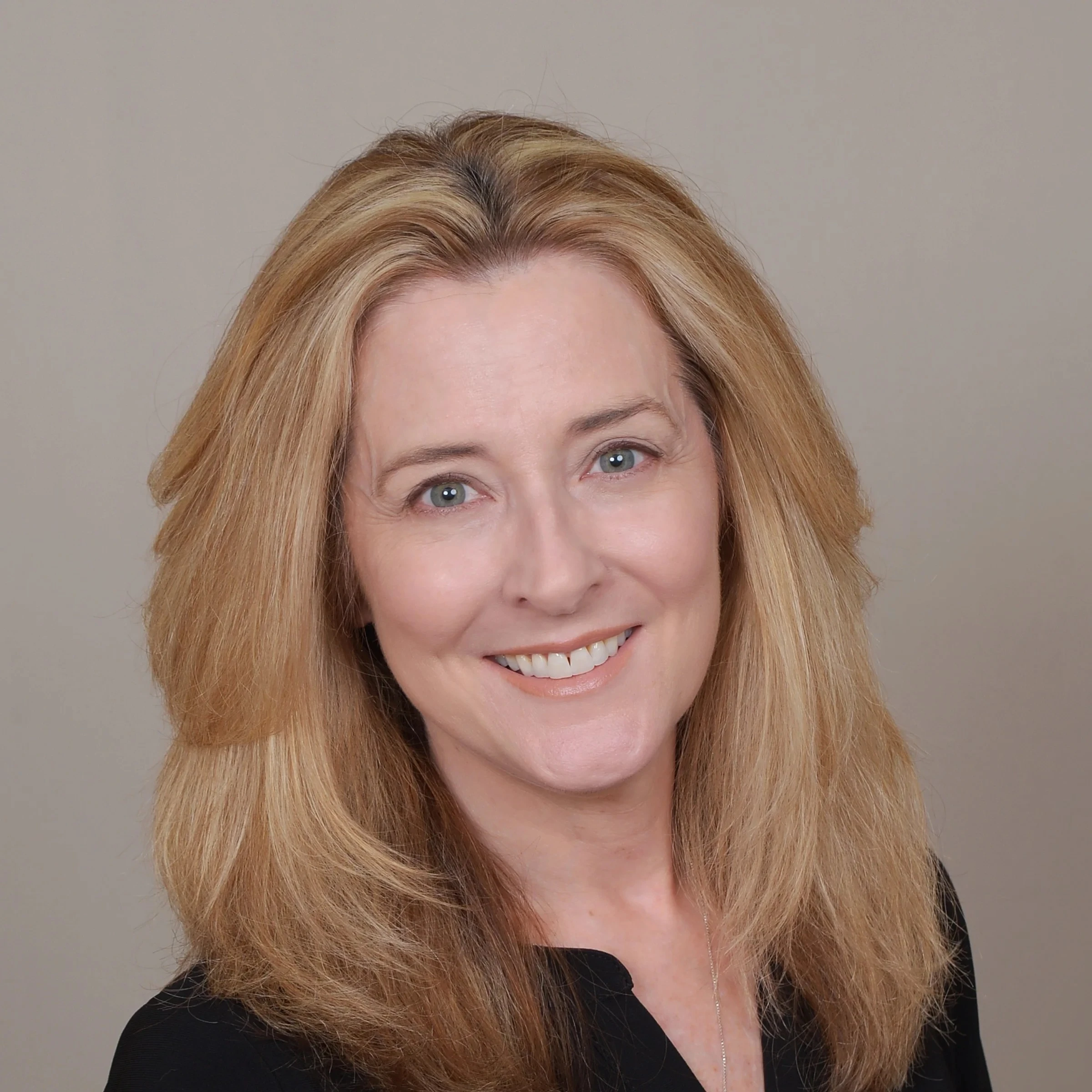
Suzanne Perry
Licensed Marriage & Family Therapist #163151

Hayley Willis
Licensed Marriage & Family Therapist #163642

Jasmine Johnson
Associate Marriage & Family Therapist #137660

Sean Palmer
Associate Marriage & Family Therapist #161917

Ashleigh Abramovici
Associate Marriage & Family Therapist #155333
FAQ - OCD
Frequently Asked Questions About OCD
Honest answers from our therapists — before you take the first step.
1.What are the most common signs of OCD in adults?
The most reliable sign of OCD is not the presence of intrusive thoughts — virtually everyone experiences those. It is the cycle they produce: an intrusive thought triggers intense anxiety or distress, which triggers a compulsion (mental or behavioral) performed to neutralize it, which provides temporary relief, which reinforces both the thought and the compulsion. Common presentations include contamination fears and cleaning rituals, harm obsessions and checking behaviors, symmetry obsessions and ordering compulsions, and Pure O — a subtype where the compulsions are entirely mental (rumination, reassurance-seeking, reviewing). OCD also frequently produces profound shame, because the content of obsessions often violates the person’s deepest values.
2. What causes OCD to develop?
OCD is caused by a combination of neurobiological, genetic, and environmental factors. Neurologically, OCD involves a dysregulation in the brain’s error-detection circuitry — specifically the cortico-striato-thalamo-cortical loop — which produces an overactive “something is wrong” signal that does not extinguish normally. Genetically, OCD has a significant heritable component. Environmentally, onset is often triggered or exacerbated by stress, trauma, or major life transitions. OCD is not caused by weakness, moral failure, or having “bad thoughts” — the content of obsessions reflects what the sufferer fears most, not what they desire or intend.
3. What is the most effective treatment for OCD?
Exposure and Response Prevention (ERP) is the gold-standard, most evidence-supported treatment for OCD, with decades of research demonstrating its efficacy across all OCD subtypes. ERP works by systematically exposing the client to feared thoughts or situations — in a carefully graduated, therapist-guided way — while refraining from the compulsive response. This breaks the OCD cycle at the neurological level, gradually recalibrating the brain’s error-detection system. ERP is most effective when delivered by a therapist specifically trained in OCD treatment. ACT (Acceptance and Commitment Therapy) is a powerful complement, teaching clients to change their relationship to intrusive thoughts rather than attempting to eliminate them. Medication (typically SSRIs) is often used alongside therapy to support treatment response.
4. What is "Pure O" OCD — and is it actually OCD?
Pure O is a colloquial term for a presentation of OCD in which the compulsions are primarily mental rather than visible behavioral rituals. The person experiences intrusive, distressing thoughts — often about harm, sexuality, religion, or relationships — and responds with mental compulsions: ruminating, analyzing, mentally reviewing, seeking reassurance internally, or trying to “figure out” whether the thought means something. Pure O is genuine OCD, treated with the same ERP and ACT approaches as other subtypes, with specific adaptations for mental compulsions. It is frequently misdiagnosed because the compulsive behaviors are invisible — and sufferers are often told their anxiety is unfounded rather than recognized as OCD.
5. Can OCD be cured — or will I have it for the rest of my life?
OCD is not typically described as “cured” in the clinical literature — but it is highly treatable, and the majority of people who receive evidence-based treatment experience significant and lasting reduction in symptoms. Many achieve what is described as remission: a state in which OCD no longer meaningfully interferes with daily life. The goal of ERP-based treatment is not the elimination of intrusive thoughts — which are a universal human experience — but the dismantling of the compulsive cycle they currently drive. With treatment, intrusive thoughts lose their power: they arise, and then they pass, without triggering the exhausting cycle of anxiety and compulsion. Clients who complete a course of quality OCD treatment consistently describe a qualitatively different relationship with their minds — and with their lives.