
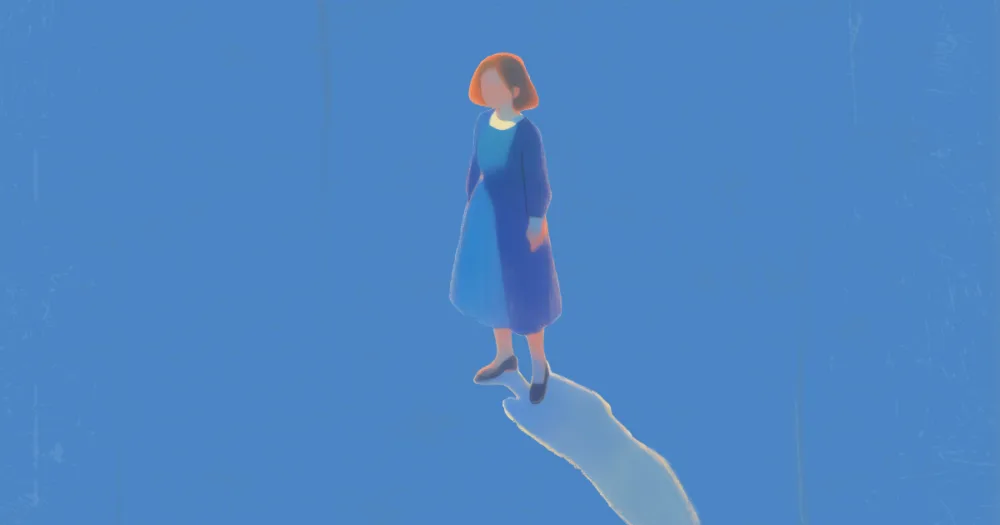
If Your Reaction to Being Mistreated Is Being Used Against You, Read This
Reagan Hinkle
Psychological & Brain Sciences, Sociology, UC Santa Barbara (Class of 2028)
You used to think of yourself as calm, collected, and someone who rarely lashes out in conflict. You hardly ever raised your voice. You tried to see the best in people and believed that every
conflict could be resolved through honest communication. As time went on, you found yourself crying more often. You started second-guessing your memory, emotions, and thinking that you had become “crazy”. Small disagreements turned into hours of defending yourself, and eventually you reacted in ways that did not feel like you. Maybe you found yourself yelling or saying something you immediately regretted. Maybe your partner had started making you believe you were the abusive one, and over time you started believing them. If you’ve ever wondered, “What happened to me?” you’re not alone. Understanding reactive responses can help explain why emotionally and psychologically abusive relationships often leave people confused, ashamed, and disconnected from who they are as a person.
Why Emotional Abuse is Damaging
One of the most challenging parts of emotional abuse is that it usually does not leave visible bruises; instead, it slowly alters the way someone sees themselves. Research on psychological
intimate partner violence has found strong associations between psychological abuse and mental health outcomes such as PTSD, depression, and anxiety (Dokkedahl et al., 2022). It can start
with subtle criticism, dismissive comments, or repeated denial of another person’s reality. Coercive control is not just one hurtful comment or argument. It is a repeated pattern of behaviors that make someone feel monitored, restricted, dependent, or afraid to act freely in the relationship (Lohmann et al., 2024). These experiences can create self-doubt, as you begin to look to the other person to tell you what is true, what happened, and even how you should feel. Scholars describe gaslighting as a form of psychological and emotional abuse involving tactics such as denial, lying, contradiction, and misdirection, which can destabilize a person’s trust in their own reality (March et al., 2025). The constant criticism, gaslighting, control, manipulation, lack of respect, blame-shifting, and emotional withholding can contribute to unpredictable reactions. Over time, your nervous system may be dysregulated, and you are put into survival mode around people you should feel safe with. When people say, “I don’t even recognize myself anymore,” they’re often describing exactly what chronic emotional abuse can do. The reactions feel foreign because they are survival responses rather than reflections of who they truly are.
You may ask yourself, “Why did I stay?” The answer is complex and varies from person to person, but it can be deeply rooted in how you were nurtured, as childhood experiences can
shape what feels familiar in adulthood. Someone who grew up in an unpredictable environment may unknowingly normalize behaviors such as inconsistency, emotional withdrawal, and
criticism. This does not mean they willingly chose unhealthy relationships, but their nervous system may have learned to associate instability with connection. So when you feel the effects of emotional abuse, your nervous system reverts to where you first learned to regulate your emotions to cope with the abuse, leaving many people feeling like they have regressed to a childhood state in the moment. However, understanding these patterns is not about blaming childhood but about recognizing how your early experiences influence adult relationships, so that healing becomes possible.
Signs You May be Experiencing Emotional Abuse
Every relationship is different, but some common warning signs include:
- You constantly question your own memories or judgment.
- You feel like you are always walking on eggshells and you have to say things in a certain way.
- You always apologize when you have done nothing wrong.
- You feel responsible for someone else’s emotions.
- You are afraid to express your needs or opinions.
- You feel emotionally drained after interactions.
- Friends or family have noticed changes in mood or personality.
If several of these sound familiar, it may be worth talking to a licensed mental health professional.
Why do people reach a breaking point?
Imagine being blamed, ignored, manipulated, and lied to over and over again. Eventually, you may scream back, say something you wish you hadn’t, or even react physically as your nervous system becomes completely dysregulated, leaving you in fight mode. The person who has been mistreating you may point out that moment of reaction and say, “See? You’re the abusive one.”
The phrase “reactive abuse” is often used informally to describe what happens to someone who has experienced ongoing emotional abuse and finally reaches a breaking point due to repeated
provocation and mistreatment from the abuser.
Many mental health professionals prefer the term reactive response because it recognizes that these reactions happen within the context of constant mistreatment. The goal is not to excuse hurtful behavior but to understand how chronic emotional stress can push someone beyond their usual ability to regulate their emotions. These reactions still matter, and we are all responsible for our own behavior; however, it is hard not to react when we are constantly ill-treated. A reactive response may help explain someone’s behavior, but it does not excuse harm or remove accountability. Understanding what led up to the reaction and context helps explain why someone may react in ways that are completely out of character for them, and that nuance is important.
Learning to Trust Yourself Again
One of the most damaging effects of emotional abuse is that it convinces people they cannot trust themselves, as you are pushed to rely on the abuser’s words. Healing from emotional abuse is the process of learning to trust yourself again. Trusting yourself means recognizing all emotions without self-judgment, allowing you to feel and validate why you feel that way, understanding how past experiences have shaped your responses, and realizing that healthy relationships never cause you to constantly question your worth. Recovery never happens overnight, but every step toward greater self-awareness, stronger boundaries, and healthier relationships is a step toward reclaiming your sense of self. If you have reacted in ways that did not feel like you, it does not automatically mean you are an abusive person. Living with ongoing manipulation, criticism, or emotional control can affect anyone to react in any way. Understanding what happened is not about placing blame but about making sense of your experience so you can move forward with greater clarity, boundaries, self-compassion, and awareness. Everyone deserves relationships where they feel safe, respected, and heard.
If you’re navigating the effects of emotional abuse or struggling to understand reactive responses, TrueMe® Counseling provides a safe, supportive space to examine these experiences.
Together, we work to understand how trauma impacts emotions, relationships, and the nervous system, while helping you rebuild confidence, strengthen boundaries, and move toward lasting healing. You do not have to make sense of it all alone. You can learn more at www.truemecounseling.com.
Sources:
Dokkedahl, S. B., Kirubakaran, R., Bech-Hansen, D., Kristensen, T. R., & Elklit, A. (2022). The psychological subtype of intimate partner violence and its effect on mental health: A systematic review with meta-analyses. Systematic Reviews, 11, Article 163. https://doi.org/10.1186/s13643-022-02025-z
Lohmann, S., Cowlishaw, S., Ney, L. J., O’Donnell, M., & Felmingham, K. (2024). The trauma and mental health impacts of coercive control: A systematic review and meta-analysis. Trauma, Violence, & Abuse, 25(1), 630–647. https://doi.org/10.1177/15248380231162972
March, E., Kay, C. S., Dinić, B. M., Wagstaff, D., Grabovac, B., & Jonason, P. K. (2025). “It’s all in your head”: Personality traits and gaslighting tactics in intimate relationships. Journal of Family Violence, 40, 259–268. https://doi.org/10.1007/s10896-023-00582-y