
Why It Works
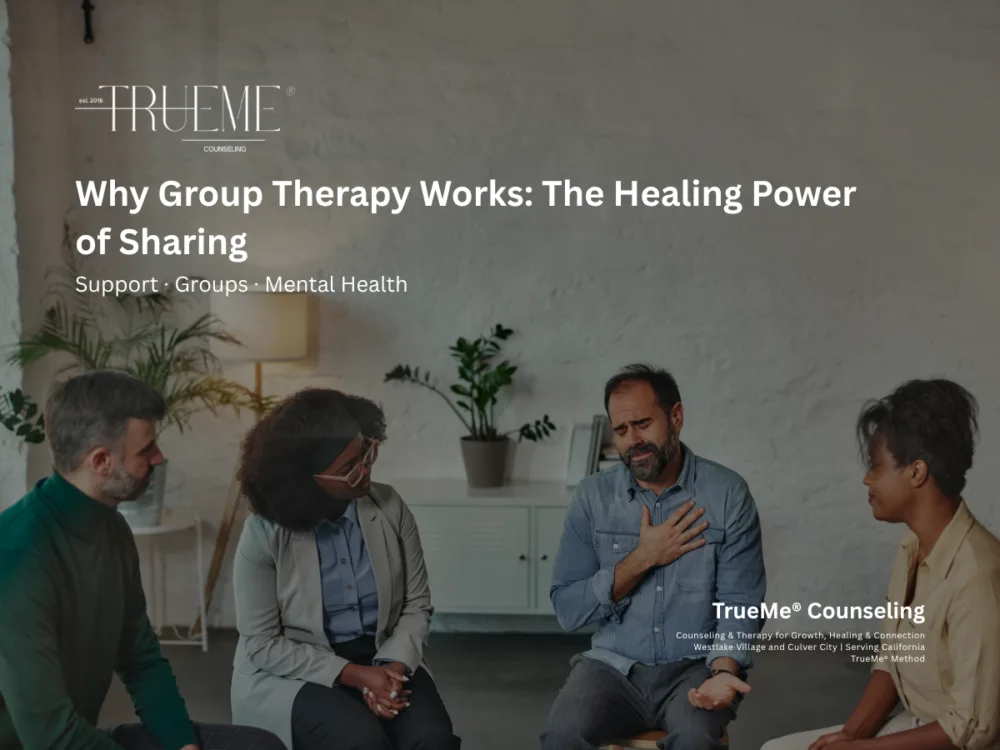
Group therapy reminds us that healing happens in relationships. While individual therapy provides personalized support, some of life’s most meaningful breakthroughs occur when people realize they are no longer alone.
One of the most common concerns I hear is:
“I don’t think I’d be comfortable talking in front of a lot of people.”
It’s a completely understandable reaction.
Opening up can feel vulnerable.
Especially around people you’ve never met.
Yet as a therapist, I’ve watched something remarkable happen again and again.
People walk into their first session feeling nervous.
They leave realizing they’re no longer carrying their struggles alone.
Why Support Groups Feel Different
Isolation is one of the greatest contributors to emotional suffering.
Whether you’re caring for an aging parent, navigating betrayal, adjusting to parenthood, or coping with a major life transition, it’s easy to believe no one else understands what you’re going through.
Support groups gently challenge that belief.
Sometimes the most healing words you’ll hear are:
“I’ve felt that too.”
Those four words reduce shame.
They normalize difficult emotions.
They remind us we’re human.

You’re Not Just Receiving Support—You’re Giving It
Many people join expecting to learn from the therapist.
What surprises them is how much they learn from one another.
Someone else’s story helps you understand your own.
Your experience gives someone else hope.
Your questions become someone else’s breakthrough.
Healing becomes a shared experience rather than an individual one.
Research consistently shows that feeling understood and connected improves emotional well-being and reduces feelings of isolation.
Group Therapy Helps Reduce Shame
Many emotional struggles thrive in secrecy.
Caregiver guilt.
Relationship betrayal.
The challenges of motherhood.
The uncertainty of fatherhood.
Body image after weight loss.
When people believe they’re the only one experiencing these thoughts or emotions, shame grows.
Therapy groups creates a safe environment where those experiences can be spoken out loud.
Often for the very first time.
Learning Through Shared Perspectives
In individual therapy, you gain one professional perspective.
In a group, you benefit from multiple perspectives while still receiving guidance from a licensed therapist.
You may discover coping strategies you hadn’t considered.
Hear encouragement that resonates differently.
Recognize strengths in yourself that others can see before you do.
Therapy groups becomes a place for learning, reflection, and personal growth.
The Power of Belonging
Human beings heal in relationships.
Feeling connected reduces loneliness.
Feeling understood builds resilience.
Feeling accepted creates emotional safety.
Support groups aren’t about having all the answers.
They’re about discovering you don’t have to face life’s challenges by yourself.
Sometimes that sense of belonging is where healing begins.
Finding the Right Support Groups
Different life experiences call for different kinds of support.
At TrueMe® Counseling, we currently offer therapist-led support groups designed for people navigating a variety of life challenges.
For Women’s Healing
Betrayed Partners
For betrayed partners of cheating addicts seeking support, understanding, and healing.
For Moms
Why Does My Toddler Hate Me?
For mothers navigating toddler rejection and the emotional complexities of early motherhood.
For Moms
Raising Capable Young Men
For mothers raising adolescent boys and navigating the changing mother-son relationship.
For Dads
Becoming a Dad
Helping fathers navigate the transition into parenthood with confidence and connection.
For Caregivers
Holding Space for Your Loved Ones
For adults caring for aging parents or loved ones living with chronic illness, dementia, or cognitive decline.
For GLP-1 Medication
Life After Ozempic
Supporting individuals navigating the emotional and psychological changes that can accompany weight loss with GLP-1 medications.
Frequently Asked Questions
What are the benefits of therapy groups?
Therapy groups provide emotional support, reduces isolation, offers new perspectives, and helps people develop healthier coping strategies while connecting with others facing similar experiences.
Is group therapy as effective as individual therapy?
Research has shown that therapy groups can be highly effective for many concerns. It complements individual therapy by providing peer support and opportunities to practice new skills in a supportive environment.
Do I have to talk during every group session?
No. Many people choose to listen during their first sessions. Participation happens at your own pace, and there is no pressure to share before you’re ready.
Is everything shared in a support group confidential?
Yes. Confidentiality is an important part of creating a safe and respectful therapeutic environment. The members are expected to honor one another’s privacy.
How do I know which support group is right for me?
Choosing the right one depends on your current life experiences and goals. If you’re unsure, we’re happy to help you determine which may be the best fit.
You Don’t Have to Navigate Life Alone
Whatever season of life you’re in, support can make a meaningful difference.
Whether you’re adjusting to parenthood, caring for a loved one, healing after betrayal, or navigating a major life transition, connecting with others who understand can provide comfort, perspective, and hope.
Explore our current therapy groups and find the one that feels right for you.
Sometimes healing begins the moment you realize someone else truly understands your story.
Ready to Join a Support Group?
You don’t have to navigate life’s challenges by yourself.
Our therapist-led support groups provide a safe, confidential space to connect with others who understand your experience while receiving guidance from licensed mental health professionals.
If you’re interested in learning more about our current groups or would like help finding the one that’s right for you, we’re here to help.
Contact Us Today
📞 Call: (818) 964-1806
📧 Email: hello@truemecounseling.com
🌐 Explore our support groups or schedule a consultation: truemecounseling.com
Healing often begins with one conversation—and sometimes, one community.